

Familiarity can make affection feel comfortable, but it does not tell you what your partner wants at every moment. Consent in a long-term relationship means remaining free to choose, decline, pause or change your mind.
An open conversation can include what you enjoy as well as what you do not want. The aim is contact both people choose now, without pressure from a past yes, a relationship label or an expectation of repayment.
Keep the invitation open to an honest answer
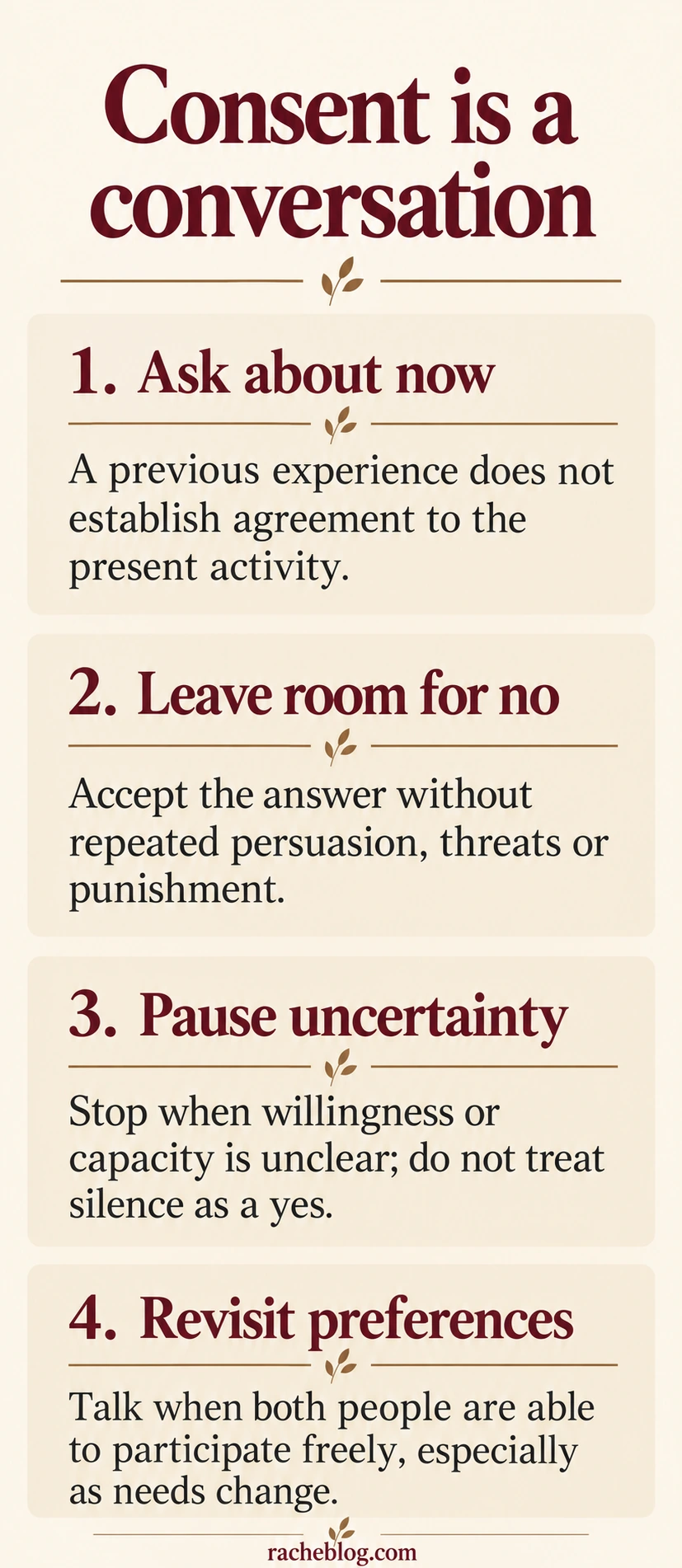
Read the guide as text
- Ask about now. A previous experience does not establish agreement to the present activity.
- Leave room for no. Accept the answer without repeated persuasion, threats or punishment.
- Pause uncertainty. Stop when willingness or capacity is unclear; do not treat silence as a yes.
- Revisit preferences. Talk when both people are able to participate freely, especially as needs change.
Start with Agreements
Consent concerns the activity that is going on now. If you are kissing and you say yes to it, it doesn’t mean that you’re saying yes to sex. Agreeing on sex yesterday doesn’t mean you agree to it today.
RAINN describes consent as voluntary, clear, and ongoing. It also explains that silence, lack of resistance, and involuntary physical responses do not establish agreement.
You don’t have to explain a refusal for it to be accepted. All you have to do is say no, or I don’t want to. Your partner can ask a question about comfort without treating the answer as an obstacle.
One good idea is that you have contact that both of you are picking. This allows the conversation to have a positive purpose. It’s easier to talk about preferences when the standard is mutual willingness instead of avoiding a complaint.
Don’t Turn Assumptions into a Yes
An invitation can make room for more than one answer. If you ask your partner if they want to kiss, this can be a yes, but you should still ask them if they want to be intimate. Pay attention to your partner and allow them to say no if that is what they want. Don’t try to guilt them or ask them if they are going to reject you.
You can make other invitations such as “do you want to cuddle,” or “would you want some space?” Make invitations honest. Do not offer a massage as a way to pressure someone into sexual contact; agreement to the massage is only agreement to that activity.
Talking About What You Want
Having a calm conversation can be easier. Ask about what kind of touches they want and what words make them feel comfortable. You might ask something like, “Are there things you don’t enjoy?” or “How would you like me to ask if I’m not sure?” Listen without going back to old habits.
Talk about what affection means to you, where one person might not like to cuddle because it looks like a promise of sex. Clarifying a hug can make the hug easier to accept if affection like that is wanted.

Don’t use the conversation to get permission that is permanent. This is information about your preferences right now, and that can change. Just because you like certain things doesn’t mean that you want to do it right at that time.
Not Tonight Can Be an Answer
One answer might be not tonight, and that is okay. If you ask if your partner wants to have company, you don’t have to hide your feelings, but don’t make your partner feel bad if they say no.
Sulking and asking over and over again can make a future yes not free. A person might agree only to end the emotional consequences, even though they do not want the activity. The Office on Women’s Health describes sexual coercion as pressure that can make someone feel they owe sexual contact. This can happen within an established relationship.
If there are different levels of desire that are a concern, talk about it. There’s room to be honest about compatibility and satisfaction, and there’s no need to solve it by asking again and again after a refusal.
Stop When Things Are Unclear
If your partner pulls away or freezes or seems stressed, then stop. Ask them what is going on and don’t just think that the absence of a no means you should keep going. A good idea is to pause and see if your partner becomes comfortable. Ask them what they want to do now and allow them to answer without pressuring them.
It's important to remember that people communicate differently. Disabilities, neurodivergence, culture, shyness, and other things can affect how someone reacts. Consent doesn’t mean you have to have a certain facial expression or that you make eye contact, but it does require clear, voluntary agreements from the people involved.
When you aren’t sure, ask. This is easier than trying to interpret body signals in your own mind. If you can’t come up with an agreement, stop the activity and take a pause. This doesn’t mean that you’re failing at intimacy.
Learning to Communicate
Some couples work best with clear words, gestures, communication, or a sign that can be used when talking is hard. Talk about which communication methods work before you rely on them.
If signals are used, they should be understood by everyone. Agreed signals do not override signs of distress, and the absence of a stop signal does not establish consent.
If one partner finds that rapid verbal questions are overwhelming, for example, the couple can agree to ask short questions and allow their partner time to answer. They shouldn’t look at slow answers as an agreement.
You should do what you can to reduce guessing. Don’t just assume that a partner’s disability means that they can’t make their own choices or that being a caregiver allows you to have authority over their sexual decisions. If there are concerns about capacity to consent, seek qualified guidance rather than making assumptions.
Make Sure Both Partners Are Able to Give Consent
Being in a relationship doesn't mean that your partner automatically has permission to be physically intimate with you whenever they want. Consent is something that both people need to give freely, and that means being awake, aware, and able to make their own decisions. Just because you're sharing a bed, wearing certain clothes, or have been intimate in the past doesn't mean that you're agreeing to anything at that particular time.
It's also important to remember that alcohol, certain medications, and other substances can affect someone's ability to make decisions. If your partner is too intoxicated or impaired to understand what's happening or freely agree to sexual activity, they cannot give consent. The same applies if someone is sleeping or unconscious. If you're ever unsure whether your partner is able to give consent, the best thing to do is stop instead of assuming that they're comfortable with what's happening.
Couples should also be able to have honest conversations about how things like drinking, medication, exhaustion, or other circumstances might affect their ability to communicate. These conversations are best held when both people are fully alert and able to understand each other. However, having a conversation beforehand doesn't mean that someone gives up their right to say no later. It also shouldn't be up to the person who's less alert to stop something they might not be able to understand or respond to.
If either person isn't able to clearly agree to sexual activity, it's better to wait until another time. You can still spend time together, talk, or enjoy other forms of closeness if both of you want to. Being physically intimate can wait, and neither person should feel pressured just because the opportunity is there. Respecting your partner's comfort and ability to make decisions is an important part of building trust in a relationship.
Understand That Physical Needs and Comfort Can Change
As time goes on, our bodies change, and so can the things we enjoy or feel comfortable doing. Health problems, stress, pregnancy, recovery from an illness, aging, and other life experiences can all affect someone's interest in physical affection or intimacy. Just because you and your partner enjoyed something in the past doesn't mean that either of you has to continue doing it if it no longer feels right.
One thing that can help is talking openly about what feels comfortable now. You might ask your partner, "Is there anything that doesn't feel good anymore?" or "What kinds of affection make you feel comfortable and close to me?" These questions can help you understand each other's needs without making assumptions. It's also important to respect someone who doesn't want to be touched at a particular time. Nobody should feel that they have to tolerate pain or discomfort just to keep their partner happy.
If you or your partner experiences pain during intimacy, has a sudden change in physical comfort, or notices something concerning about your health, talking with a healthcare professional might be helpful. However, getting medical care should be about understanding and addressing the person's health needs, not pressuring them to become sexually available. A relationship conversation can't replace professional medical advice, and nobody should feel that they have to seek treatment just to meet their partner's expectations.
Remember that physical intimacy isn't the only way to feel connected to someone you love. Sometimes closeness might involve cuddling, holding hands, spending time together, having meaningful conversations, or simply enjoying each other's company. Other times, one or both partners might prefer having some personal space. What matters is finding ways to connect that both people genuinely enjoy and feel comfortable with.
Every relationship goes through changes, and the same things that worked in the beginning might not always work years later. Instead of expecting physical affection and intimacy to stay exactly the same, try to understand each other's changing needs. A healthy relationship allows both people to communicate honestly, respect boundaries, and find ways to maintain their connection without pressure or expectations that make either person uncomfortable.
Care, Affection and Sexual Pressure
Cooking dinner, paying bills, taking care of the children, or supporting a partner when they're sick doesn't mean that the debt should be payable through sex. Neither does getting an expensive gift.
You can say, "I want to be able to care for each other without either of us feeling that something hasn't been repaid physically." This conversation can show patterns that you've not noticed before. Maybe one partner offers help hoping for intimacy, and the other feels unable to accept a compliment without thinking this is a request for sex.
If a partner provides an evening of care and feels disappointed that you want to sleep, they can acknowledge their own feelings while respecting your choice to rest. Caring for each other means caring for each other, even if nothing is offered.
Having Different Desires
When one partner wants more sexual contact than the other, both might have feelings that need to be heard. Pick a calm setting and talk about the pattern without using the conversation to reopen refusals from earlier in the day.
Ask what each person wants when it comes to intimacy, what creates pressure, and what kind of connections are welcomed. Ask if there are concerns that need professional support. Do not set a quota that makes sexual contact feel compulsory. Scheduling time together can create opportunities for a stronger connection, but doesn't promise that sexual activity will happen.
You might see that you have workable changes or that you're facing some kind of incompatibility. Neither one gives one person a right to the other person's body. It's possible to talk about different relationship needs while still respecting the boundaries.
Take Responsibility When You Cross a Boundary
A boundary crossing needs attention and accountability; do not assume that unwanted contact was merely a misunderstanding. However, if you realize that you've made your partner uncomfortable or misunderstood their boundaries, the first thing you should do is stop what you're doing and listen to how they feel. Instead of immediately trying to explain yourself or focusing on how guilty you feel, give your partner the opportunity to express their concerns without making them feel responsible for comforting you.
It's also important to take responsibility for your actions instead of making excuses. For example, you might say, "I realize that I continued even after you seemed uncomfortable, and I should have stopped. I'm sorry for not paying closer attention to your feelings. Is there anything you need from me right now?" This acknowledges what happened without expecting your partner to immediately forgive you or explain why the experience was upsetting.
Once your partner feels comfortable discussing what happened, you might be able to talk about changes that could prevent similar situations in the future. These could involve asking clearer questions, slowing down during physical intimacy, or agreeing that certain activities are no longer comfortable. Sometimes getting professional guidance might also be helpful. However, simply having a conversation or apologizing doesn't automatically repair the harm. What matters is respecting the boundaries your partner has established and consistently following through with any changes you've agreed to make.
It's also important to understand that sexual activity without consent is serious, even when two people have been together for many years. Being married or in a committed relationship doesn't change someone's right to decide what happens to their body. If you've experienced something without your consent, you have the right to seek confidential support, medical care, or professional guidance. You don't have to decide what to call the experience or whether you want to stay in the relationship before getting help.
Understand When the Problem Is More Than Miscommunication
Sometimes relationship problems aren't caused by misunderstandings or poor communication. If your partner repeatedly ignores your boundaries, refuses to accept no for an answer, threatens you, or makes you feel guilty for not wanting physical intimacy, the problem is much more serious than simply needing to communicate better. No matter how carefully you explain your feelings, you shouldn't have to convince someone to respect your right to make decisions about your own body.
If someone becomes angry whenever their partner refuses physical intimacy, for example, or threatens to end the relationship unless they agree, that creates pressure rather than genuine consent. The same applies when someone uses financial dependence, emotional manipulation, or fear to get what they want. A healthy relationship should allow both people to say no without worrying about being punished, threatened, or treated badly afterward.
If you're afraid of what your partner might do when you set a boundary, consider reaching out privately to someone who specializes in sexual assault or domestic violence support. These professionals can help you understand your options and think about ways to protect your safety. If you're in immediate danger, contacting emergency services when it's safe to do so might be necessary. You also don't have to agree to couples counseling or another joint conversation before getting individual support, especially if doing so could put you at risk.
If you're the person who has been ignoring your partner's boundaries or pressuring them into physical intimacy, it's important to stop that behavior and take responsibility for changing it. Seeking qualified professional help can be an important step, but your partner shouldn't have to teach you how to respect their boundaries while continuing to experience the same behavior.
The most important thing to remember is that consent should always be freely given, and both people should feel safe expressing what they do and don't want. When someone repeatedly ignores those boundaries, the solution isn't simply finding better words or having another conversation. It requires recognizing the seriousness of the behavior, taking responsibility, and making sure that the person whose boundaries were crossed has the support and safety they need.
Ask Questions About Everyday Choices
Everyday choices give low-pressure opportunities to learn about each other and how you communicate. Ask before you share a picture or invite people into a shared space.
These are things that aren't the same as sexual consent, but they can show whether asking feels normal and whether declining is respected. You might see that one person automatically agrees to avoid inconvenience, or that the other one rushes before they get an answer.
Pick one small change, such as waiting for a response before you post your picture as a couple. The aim is to make room for another person's choices without turning every interaction into an exercise.
Keeping Conversations Going
You can start with a short question, such as: "I want us both to feel free to say what we need to say. Is there anything about our relationship that you want to handle differently?"
Take a few minutes to listen without distraction. Listen for a practical change instead of trying to look at every intimate experience as one conversation. Go back to the preferences when life changes, if something feels uncomfortable, or just because you're curious about it. You do not need a special occasion to revisit preferences.
Consent in a long-term relationship is a continuing expression of respect. Even if you're familiar and can understand your partner more, still ask questions and make room for the person they are today.
Choose respectful consent wording
Pick a situation for clear, non-pressuring language you can adapt to an ongoing relationship.
No wording can turn pressure into freely chosen consent. When consent or capacity is unclear, stop.
Use the questions and examples in the article above; the draft builder needs JavaScript.
15 questions readers ask
1. Does marriage create ongoing sexual consent?
No. Marriage, cohabitation and a long sexual history do not establish consent to a particular activity now. Each person remains free to decline or stop.
2. Does a previous yes apply today?
No. A past agreement describes that occasion. Check present willingness rather than treating familiarity as permanent permission.
3. Does kissing mean consent to sex?
No. Agreement to one activity does not establish agreement to another. Keep each transition open to a freely given answer.
4. Does a refusal need an explanation?
No. Someone can decline without giving a reason that satisfies the other person. A question about comfort should not become an argument against the answer.
5. Is silence the same as agreement?
No. Silence, lack of resistance or freezing do not establish consent. Stop if willingness is unclear.
6. Do physical responses prove someone wants an activity?
No. Involuntary bodily responses do not establish consent. Pay attention to freely expressed agreement and the person’s choices.
7. Can I change my mind after an activity begins?
Yes. Consent is ongoing. A partner should stop when consent is withdrawn, without treating the earlier agreement as a debt.
8. What is a low-pressure check-in?
Use a clear question that permits any answer, such as asking whether the person wants to continue or stop. Give time to respond and respect the answer.
9. Can communication methods be adapted for disability?
Yes. Discuss accessible words, gestures or tools that everyone understands. Do not assume a disability removes autonomy, or treat a slow response as agreement.
10. Can someone consent while asleep or unconscious?
No. If a person cannot understand and freely agree to what is happening, stop. Prior conversations do not remove the need for present capacity and willingness.
11. What if alcohol or another substance affects someone?
If impairment prevents understanding or a free choice, the person cannot consent. When capacity is uncertain, stop rather than proceeding on an assumption.
12. Is repeated asking after a refusal a problem?
It can create pressure and wear someone down. A yes given to avoid guilt, threats or punishment is not a freely chosen solution.
13. How can partners discuss different levels of desire?
Choose a calm time outside a refusal and discuss preferences, pressure, health concerns and compatibility. Do not use the conversation to impose a sexual quota or entitlement.
14. Do gifts, chores or emotional support create an obligation?
No. Care and gifts are not payment for sexual contact. Talk about unmet needs directly without making another person’s body the repayment.
15. What if my boundaries have been ignored?
You can seek private support, medical care or sexual assault or domestic violence guidance without first deciding what to call the experience or whether to stay. Use emergency help if there is immediate danger.