

You can understand that a relationship has ended and still miss the person, hope they will return or feel love for them. Those feelings do not need to disappear before you begin looking after your own life.
Moving forward can start with small choices about contact, routines and support. There is no single conversation or timetable that everyone must follow.
On this page

Make room for mixed feelings
You may feel sadness, relief, anger, affection or uncertainty at different moments. Try to name what is happening without turning it into a test of whether you are moving on correctly.
The NHS information on grief and loss includes the end of a relationship among experiences of loss. It explains that people do not necessarily experience every commonly described stage or move through them in a fixed order.
You can miss an ordinary shared routine as well as the person. Identifying what you miss may help you decide what kind of support or change would make a particular part of the day more manageable.
Recognise what has ended
A relationship needs both people’s willingness to continue. If your ex has said that it is over, take that answer seriously even when you do not understand or agree with every reason.
You may wish for one more conversation that makes the ending feel complete. You can ask respectfully if a conversation is welcome, but they are free to decline. Repeated messages, surprise visits or finding another way around a request for no contact do not create a mutual relationship.
You can write down questions for yourself or discuss them with someone you trust. You do not have to obtain your ex’s preferred explanation before deciding how to care for yourself.
Remember the whole relationship
When you miss someone, particular good moments may come to mind repeatedly. You do not need to discredit those memories to recognise other parts of the relationship.
If reflection feels useful, make three short notes: what you valued, what was difficult and what you want in a future relationship. Keep the notes about your experience rather than trying to diagnose your ex or decide what every action meant.
Social media offers fragments of someone else’s life. A cheerful photograph cannot establish how they feel about the breakup, and a quiet account cannot tell you that they want to return. Notice whether checking leaves you with useful information or more questions you cannot answer.
Build a manageable routine for now
Choose one or two ordinary things that support your day: a meal, a regular bedtime, a short walk, an essential task or time with someone you trust. You do not need to redesign your life while you are dealing with a difficult week.
You might make a plan for a time that feels especially empty, such as the evening when you used to meet. A simple activity or a conversation can give that time some structure without requiring you to pretend you are cheerful.
Rest, privacy and company are all choices you can adjust. Reconnecting with an interest or friendship does not erase the relationship’s importance. It gives your attention somewhere else to go as well.
Choose contact that supports your needs
Consider whether social messages, updates or checking an account are making daily life harder. You might want a pause, fewer updates or a clearer distinction between practical communication and personal conversation.
If you share responsibilities or have belongings to arrange, focus necessary messages on the specific matter. For example: “I am not ready for social messages. Please email me about arranging collection of the keys.” This is an example to adapt to your circumstances, not a rule that fits every breakup.
If you fear threats, monitoring or retaliation, seek private support before making changes that could increase risk. You do not owe ongoing personal access to demonstrate kindness, and you should respect the other person’s limits too.
Find support without rushing the next relationship
A trusted friend can listen, spend time with you or help with an ordinary task. You can say what would be useful: “Could we have dinner without discussing my ex for a while?” or “I would like to talk, but I do not need advice tonight.”
If distress is making it difficult to cope or manage everyday life, consider support from an appropriate healthcare professional or qualified counsellor. Asking for help does not require you to have a particular explanation for your feelings.
There is no deadline for dating again or becoming friends with your ex. If you are considering friendship, Being Friends With Someone You Love explores respect, space and honest choices. You can decide what contact you freely want now and revisit that decision later.
Choose a way to answer the practical part
If you need to share a payment confirmation with an ex, decide when you’ll send that and what details it needs. If you feel upset after sending it, plan something steady for afterward, such as a short call with a friend or time outside.
If contact brings up longer conversations you don’t want, you can say what you’re available to discuss. If an ex has been threatening or controlling, get confidential support before choosing a contact plan.
Read the infographic in text
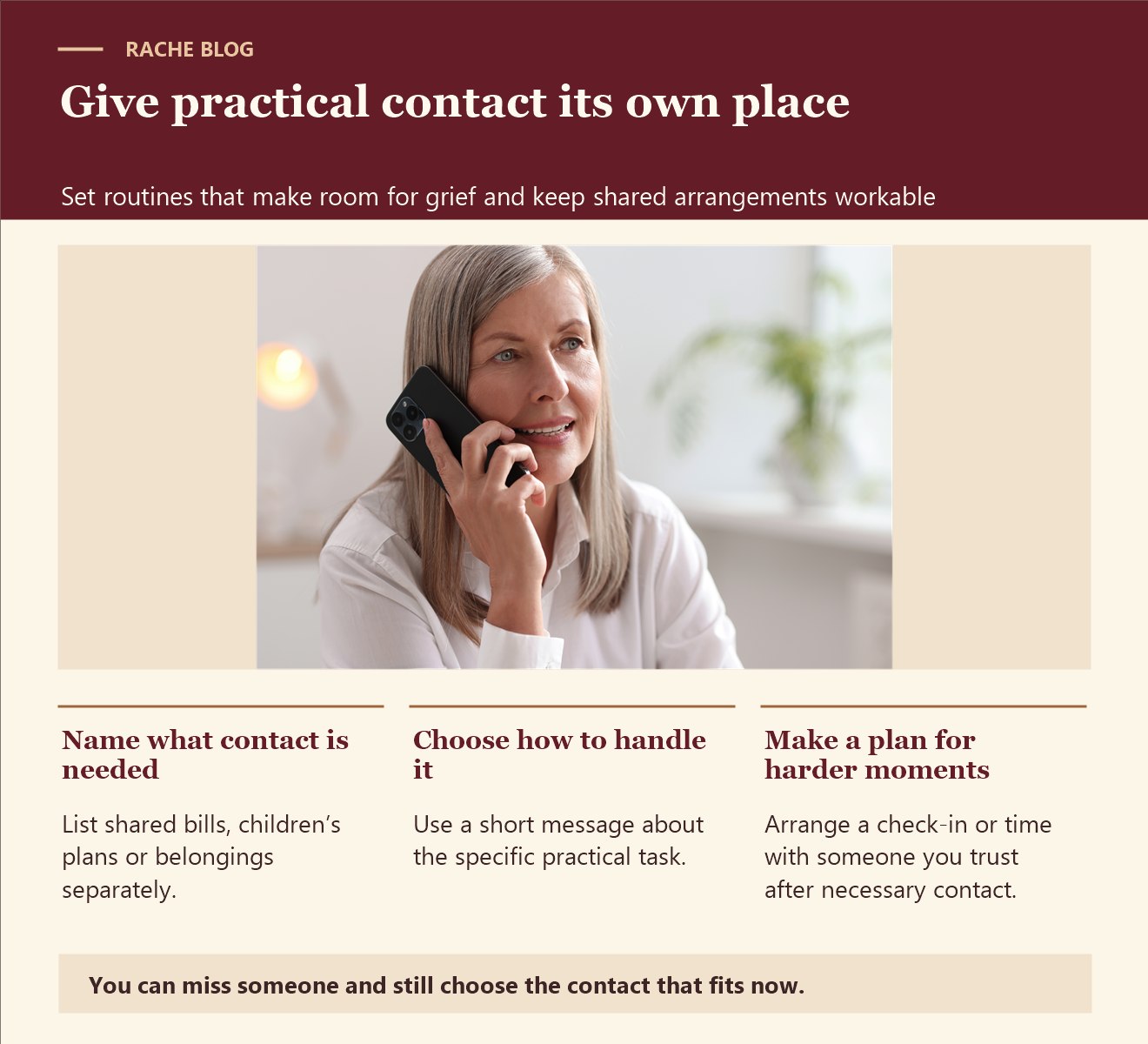
Give practical contact its own place
Set routines that make room for grief and keep shared arrangements workable
- Name what contact is needed List shared bills, children’s plans or belongings separately.
- Choose how to handle it Use a short message about the specific practical task.
- Make a plan for harder moments Arrange a check-in or time with someone you trust after necessary contact.
You can miss someone and still choose the contact that fits now.