
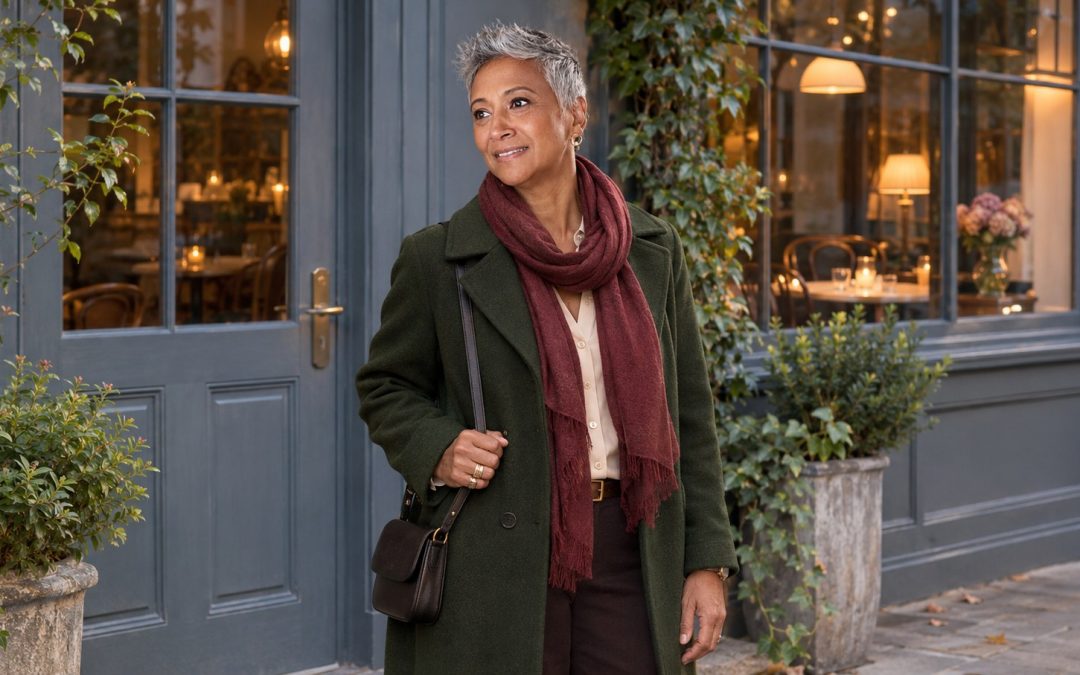
A first-date kiss is something you choose together. You do not need to kiss to prove interest, and waiting does not make your interest less real.
The useful questions are whether you both want it, whether you can answer freely and whether either person can comfortably change their mind.
On this page

Start with what you want
You can kiss on a first date, wait until later or decide you do not want to kiss this person. There is no timetable that makes your interest more sincere. Paying for dinner, accepting a lift or enjoying a conversation creates no obligation to physical affection.
Before worrying about what your date expects, notice your own preference. Are you interested in a kiss, curious but uncertain, or ready to say goodnight? You do not need a persuasive explanation for wanting to wait. A pleasant date can end with warm words and some personal space.
Ask in a way that leaves room for no
A short question can be part of a warm moment: “I’d like to kiss you. Would you like that?” You can also ask, “Would a kiss feel comfortable, or would you rather say goodnight?” These are examples to adapt to your own voice.
Ask before moving into the other person’s space, then allow time for an answer. If they hesitate, turn away or seem unsure, pause rather than treating uncertainty as an invitation to persuade them. Smiling, flirting and agreeing to a date do not settle the question for them.
RAINN’s guide to consent explains the importance of freely chosen, ongoing agreement. An earlier yes does not remove anyone’s freedom to change their mind. If either person is too impaired to make a clear choice, wait.
Find words for yes, wait or no
- If you want to: “Yes, I’d like that.” You can still ask to slow down or stop.
- If you want more time: “I’ve enjoyed tonight. I’d rather wait before kissing.”
- If you do not want to: “No, thank you.” You can keep the answer brief.
- If you want another date without a kiss: “I’d like to see you again, and I’d like to take the physical side slowly.”
A hug is another choice requiring agreement, not an automatic substitute when a kiss is declined. You can offer a wave or a friendly goodbye instead. If saying no feels unsafe, focus on ending the encounter and reaching support in a way that is safe for you; you do not owe a lesson in etiquette.
Respond to a boundary with respect
If your date declines, a simple “Of course—thanks for telling me” is enough. Give them physical room. Avoid asking repeatedly, demanding a reason or turning your disappointment into their responsibility.
If someone stops during a kiss, stop too. You can check in without pressing them to continue. Taking a boundary seriously matters more than creating a perfectly smooth romantic moment.
You are allowed to feel disappointed and still behave kindly. A declined kiss might mean they prefer a slower pace, are uncertain about dating you or simply do not want a kiss. Let their words guide your next step instead of choosing the explanation you prefer.
Keep one moment in perspective
A kiss can be enjoyable, awkward, exciting or unremarkable. It cannot establish compatibility, exclusivity or a shared future. Likewise, leaving without a kiss does not prove that the date failed.
Afterwards, consider the whole encounter: Did you enjoy talking? Could you express a preference? Was your answer respected? Would you freely choose to spend more time together? These questions give you more to work with than a rule about what should happen before the first goodbye.
Follow up with a clear invitation
If you would like another date, say so: “I enjoyed getting to know you. Would you like to meet for coffee next week?” If you are unsure, take time to decide. You do not have to promise a second date to soften a boundary or apologize for taking things slowly.
Continue talking about comfort as the relationship develops. Our guide to consent in a long-term relationship explores how those conversations remain useful beyond the first few dates.
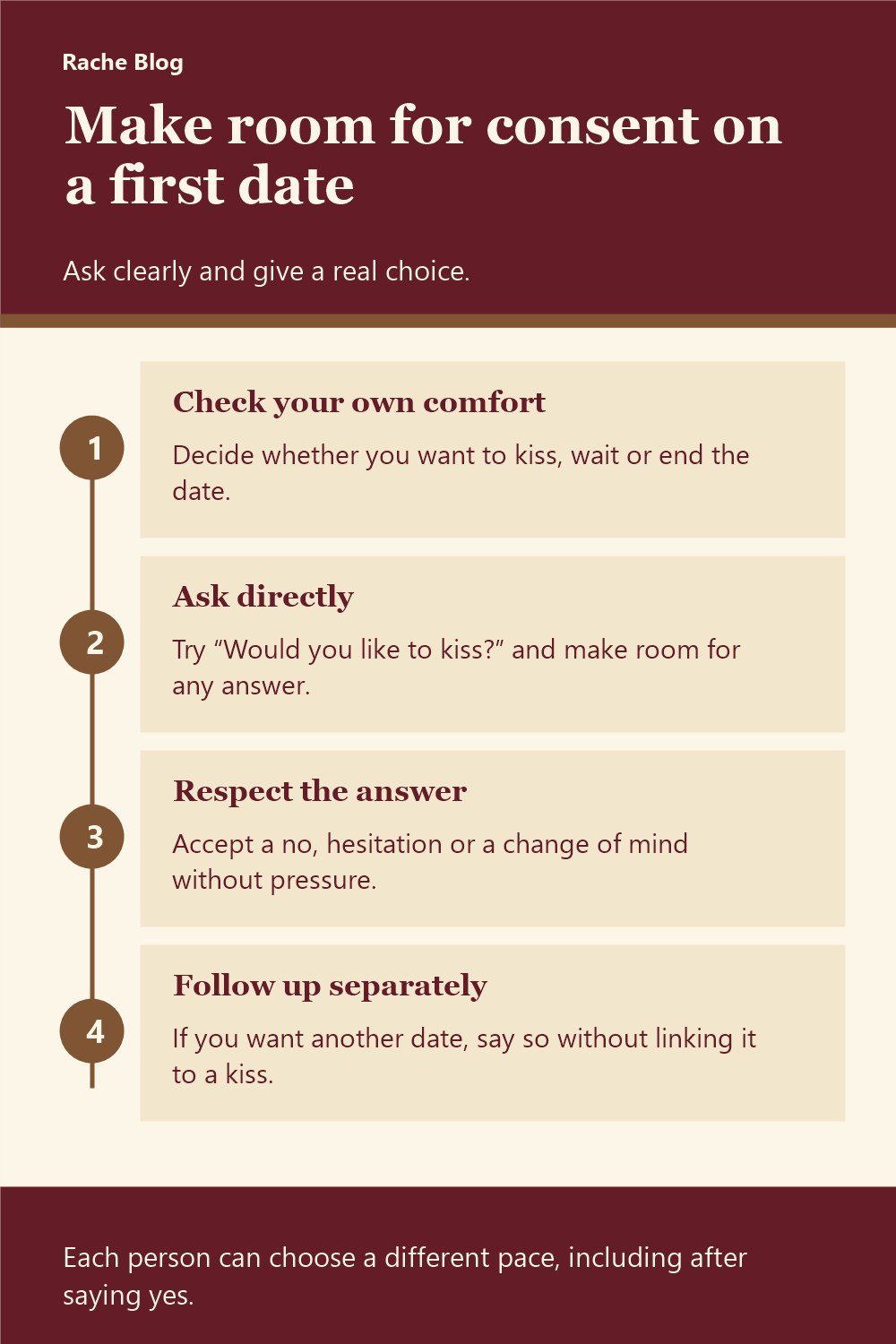
Read the infographic in text
Make room for consent on a first date Ask clearly and give a real choice.
- Check your own comfort Decide whether you want to kiss, wait or end the date.
- Ask directly Try “Would you like to kiss?” and make room for any answer.
- Respect the answer Accept a no, hesitation or a change of mind without pressure.
- Follow up separately If you want another date, say so without linking it to a kiss.
Each person can choose a different pace, including after saying yes.