

A first date is a chance to find out whether you enjoy each other’s company. You can prepare to be considerate while leaving room for nerves, differences and an answer you did not expect.
Use these eleven suggestions in ways that suit you. You can aim for a respectful meeting without controlling whether either person wants another date.
On this page
- Listen with curiosity
- Share the conversation
- Be honest while keeping your privacy
- Discuss differences respectfully
- Use names naturally
- Give yourself room for nerves
- Show consideration without overpromising
- Express interest without games
- Choose clothing that suits the plan
- End the meeting when you need to
- Choose an activity you both want
Listen with curiosity
Give the other person room to finish a thought and ask a follow-up question when you are interested. “What did you enjoy about that trip?” gives them space to explain.
Listening does not require a fixed amount of eye contact or a performance of perfect attention. Choose ways of engaging that are comfortable for you, and ask if you have missed something.

Share the conversation
Offer something about yourself as well as asking questions. If you have been talking for a while, make room for their view; if you have only been asking questions, share a relevant experience or preference.
You do not need to count minutes or make every exchange equal. Notice whether both people have an opportunity to take part and decline a topic.
Be honest while keeping your privacy
You can acknowledge a tiring day without giving a complete account of everything that went wrong. You can also say that a personal subject is something you would rather discuss another time.
Being considerate does not require pretending that everything is wonderful. If something about the date concerns you, you can raise it rather than hiding it to maintain a positive impression.
Discuss differences respectfully
Beliefs, politics or hopes for the future may matter to your choices. You can ask about them respectfully instead of assuming that every serious subject must be avoided.
Consider whether you are both comfortable with the conversation. Ask what someone means before arguing with a conclusion, and leave room to disagree or move on. A difference can be useful information about compatibility.
Use names naturally
Use the name the person prefers, and ask about pronunciation if you are unsure. You do not need to repeat their name throughout the conversation as a technique for creating closeness.
Respond to the specific things they share. Remembering an interest or asking a relevant question can show that you have been listening without relying on a memorised routine.
Give yourself room for nerves
You can pause, take a sip of water or say that you feel a little nervous. You do not have to appear completely relaxed for a conversation to be worthwhile.
If breathing gently helps you, the NHS guide to breathing exercises for stress describes a comfortable approach without forcing the breath. You can choose another way to settle if focusing on breathing does not suit you.
Show consideration without overpromising
A sincere comment about a story, interest or the place you chose can be enough. Keep compliments comfortable and respectful rather than using intense praise to rush a feeling of closeness.
Ask before taking a photo together or initiating touch. You can show interest while accepting a preference that is different from yours, including a wish to keep things less physical.
Express interest without games
If you enjoyed the meeting and would like another date, you can say so plainly: “I liked talking with you. Would you like to meet again?” Give the other person room to answer.
You do not need to create jealousy, deliberately confuse someone or keep contacting them after a refusal. A clear expression of interest leaves both people free to choose.
Choose clothing that suits the plan
Wear something you feel comfortable sitting, standing or moving in, with the venue and weather in mind. Your usual style can be part of how you present yourself.
Consider practical details such as a layer for a cool evening or shoes that suit the activity. You do not need a particular outfit to deserve attention or respectful treatment.
End the meeting when you need to
You can decide that a date does not suit you and leave before the original plan ends. For an ordinary mismatch, a brief, kind explanation may be enough: “I am going to head home. Thank you for meeting me.”
If you feel unsafe, focus on getting help or reaching a safer place. You do not owe continued conversation, politeness or a private explanation at the expense of your safety.
Choose an activity you both want
A date can be simple: a café conversation, an accessible public exhibition or another plan you both enjoy. Discuss the time, location, cost and any access needs rather than assuming that a surprise will suit everyone.
Afterwards, consider your own experience as well as the impression you hope you made. Did you feel comfortable and interested? You can value a pleasant meeting without deciding the whole future of a relationship.
Read the infographic in text
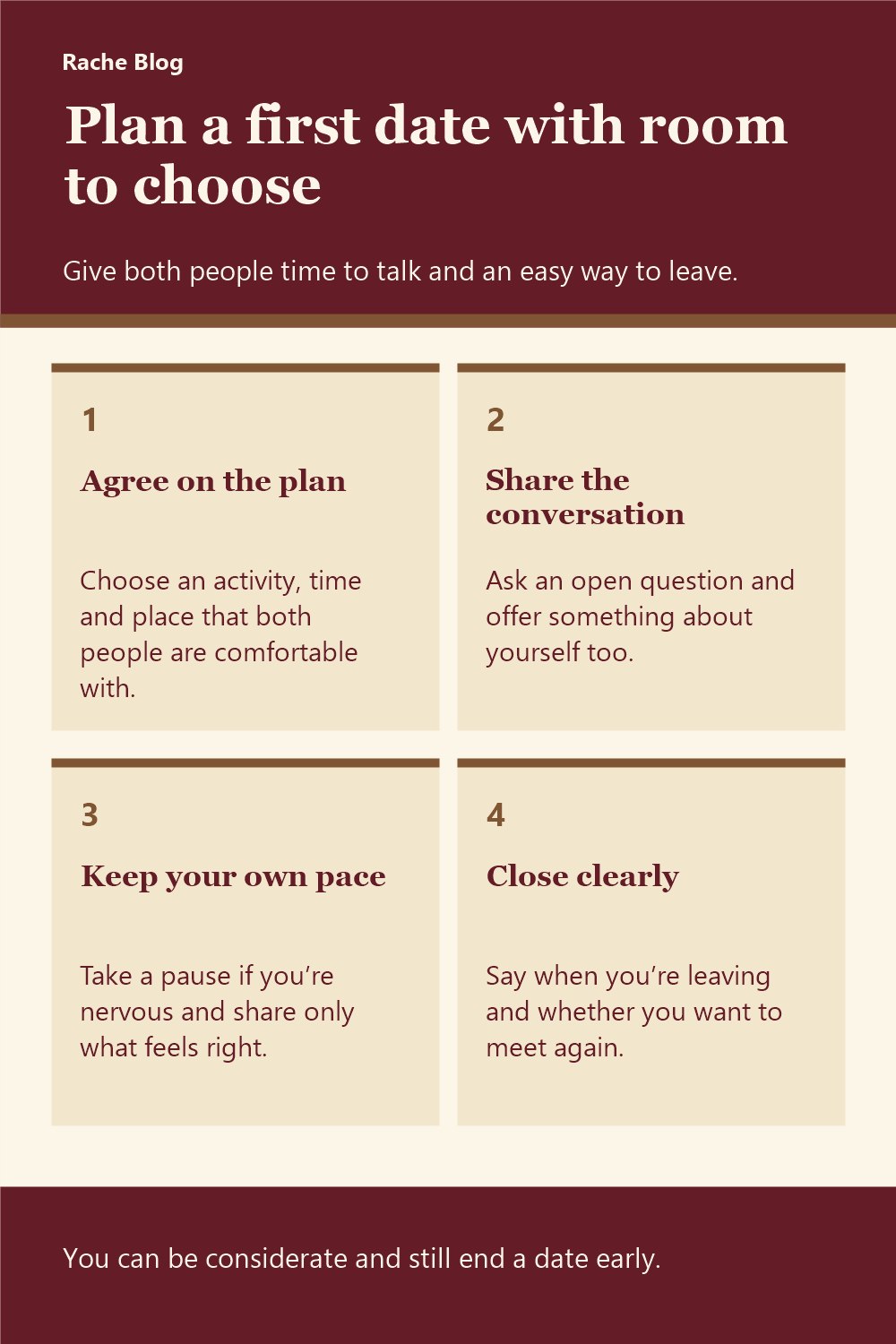
Plan a first date with room to choose Give both people time to talk and an easy way to leave.
- Agree on the plan Choose an activity, time and place that both people are comfortable with.
- Share the conversation Ask an open question and offer something about yourself too.
- Keep your own pace Take a pause if you’re nervous and share only what feels right.
- Close clearly Say when you’re leaving and whether you want to meet again.
You can be considerate and still end a date early.