

Being friends with someone you love can feel comforting, painful or both. Romantic feelings do not automatically make friendship impossible, and staying close is not an obligation. The useful question is whether the friendship available now is something both of you freely want.
Start with the other person’s actual answer. You can acknowledge your feelings while respecting their choice and deciding what kind of contact you can manage. You do not need to earn a relationship through patience, favours or becoming a different person.
On this page
- Name what you want from the connection
- Allow disappointment without judging your worth
- Let the answer you received stand
- Decide whether you want the friendship itself
- Notice how contact affects your day
- Choose space that you can actually maintain
- Explain your boundary without making a bargain
- Agree on what ordinary friendship means
- Keep favours separate from romantic expectations
- Make room for other people and interests
- Let time be information rather than a deadline
- Revisit romance only when there is a clear mutual opening
- Review your choice without promising forever

1. Name what you want from the connection
Would you choose this friendship if you knew it would never become romantic? You do not need an immediate answer, but it is a useful question. Enjoying shared interests and hoping for a future date can exist together; notice which hope is driving your decision to stay close.
2. Allow disappointment without judging your worth
You may feel sad, embarrassed or preoccupied after learning that your feelings are not mutual. Those feelings do not establish that you are unlovable or that the other person has treated you badly. Give yourself room to be disappointed without turning their preference into a verdict on your value.
3. Let the answer you received stand
If they have said they want friendship, treat that as the relationship they are offering. A friendly message, compliment or invitation does not cancel a clear refusal. Avoid asking mutual friends to persuade them, arranging a surprise romantic gesture or repeatedly reopening the same question.
4. Decide whether you want the friendship itself
A friendship can include humour, shared activities and care without a romantic future. It is also reasonable to decide that this connection is too difficult for you right now. Neither person owes the other a particular relationship: you can decline friendship, and they can decline dating.
5. Notice how contact affects your day
Look beyond the relief of receiving a message. Are you able to enjoy the conversation, or do you spend hours rereading it for hidden meaning? Does meeting up leave you reasonably settled, or repeatedly upset? These observations can help you choose an amount of contact that fits your situation.
6. Choose space that you can actually maintain
You might pause one-to-one meetings, mute updates or reduce late-night messages. Choose an action under your control rather than asking them to stop dating other people. Love is respect’s guide to boundaries explains the difference between protecting your own comfort and controlling someone else.
7. Explain your boundary without making a bargain
You could say, “I care about our friendship, but my feelings are making regular contact difficult. I’m going to take some space and won’t be available for our usual daily messages.” This is example wording to adapt, rather than a promise that space will make your feelings disappear.
Avoid adding a condition that makes them responsible for ending your discomfort, such as asking them to reconsider dating before you can be friends. A boundary describes what you will do. It is not a deadline for them to change their mind.
8. Agree on what ordinary friendship means
If you both want to stay friends, discuss any confusing situations: overnight visits, affectionate touching, frequent private messages or conversations about dating. Do not assume that friendship gives either person permission for every kind of closeness. Keep arrangements specific enough that both people understand them.
9. Keep favours separate from romantic expectations
Offer time, gifts or help only when you want to give them without a romantic return. If you notice resentment because your effort has not led to dating, step back and reconsider what you can offer freely. Friendship is not a waiting list or a payment toward a future relationship.
10. Make room for other people and interests
Spend time with friends who are not involved in this situation, keep familiar routines and choose activities you enjoy for yourself. You can ask a trusted person to listen without asking them to criticise your friend or analyse every interaction. Dating someone else is optional, not a required way to move on.
11. Let time be information rather than a deadline
There is no fixed number of days after which you must be comfortable with friendship. Notice whether your feelings are becoming more manageable and whether the arrangement still suits you. Taking longer than you expected does not mean that you have failed or that you should abandon a boundary.
12. Revisit romance only when there is a clear mutual opening
People can change their minds, but you do not need to organise your life around that possibility. If the other person clearly raises romantic interest later, you can talk about what has changed and what you each want now. Occasional flirting is not a dependable substitute for that conversation.
13. Review your choice without promising forever
You can value someone and still choose less contact, a pause or an end to the friendship. You can also continue a friendship that feels honest and workable. Choose the relationship you can participate in now, and avoid promising either permanent closeness or a future reunion that you cannot know.
Separate time you share from time that feels like waiting
If you are both in the same group, you may still want to attend its events while taking a break from long calls together. You can say you need time and make a simple plan for the contact you still want.
Keep stories or private messages out of the group conversation. Friendship can feel different over time, and both people get to decide what they are comfortable with.
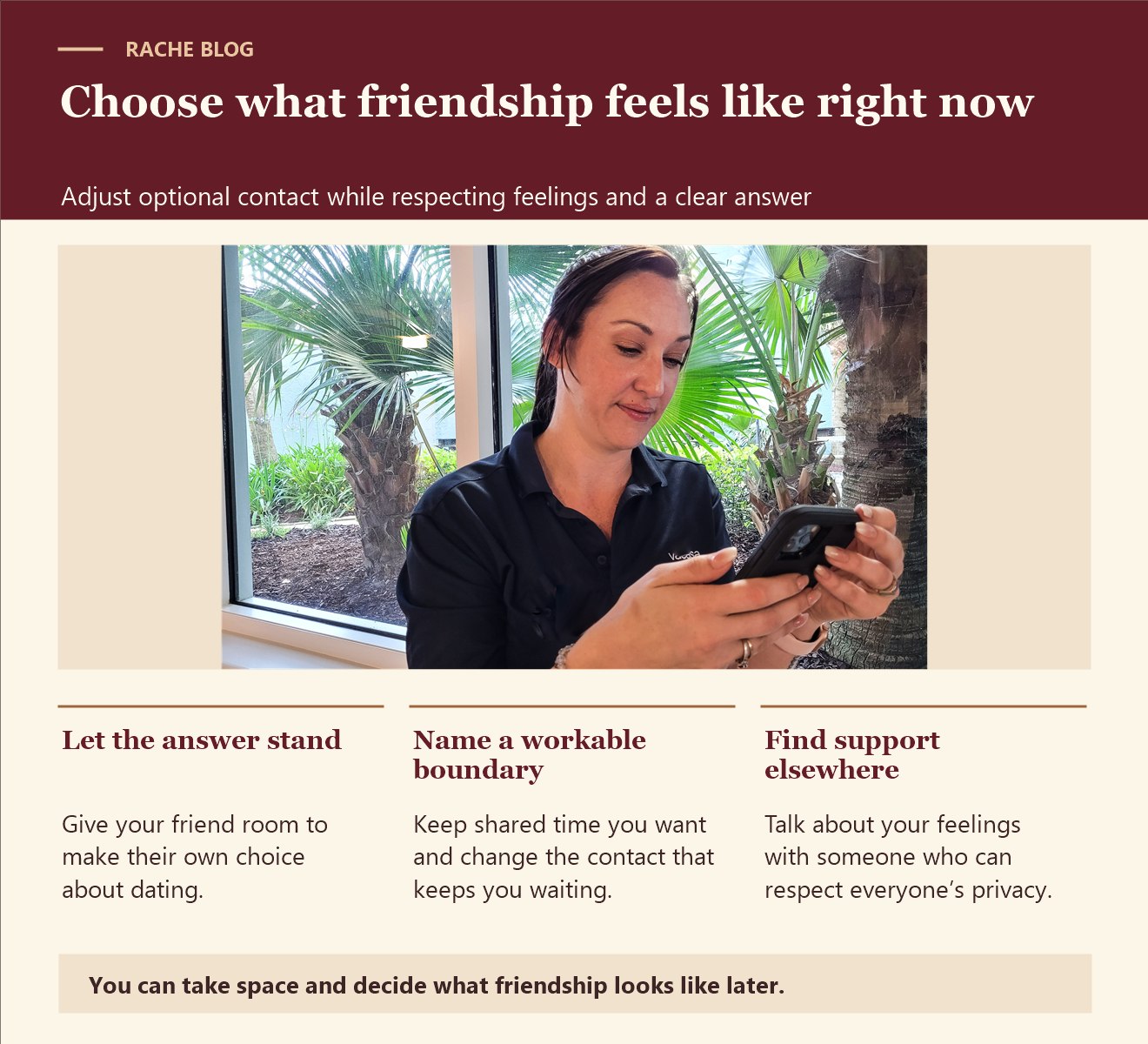
Read the infographic in text
Choose what friendship feels like right now
Adjust optional contact while respecting feelings and a clear answer
- Let the answer stand Give your friend room to make their own choice about dating.
- Name a workable boundary Keep shared time you want and change the contact that keeps you waiting.
- Find support elsewhere Talk about your feelings with someone who can respect everyone’s privacy.
You can take space and decide what friendship looks like later.