

When someone does not want to label a relationship, it can leave you wondering what they mean and what you can ask for. Their preference may involve timing, privacy or a different understanding of the words.
You do not have to diagnose the reason before discussing your own needs. Focus on what the person says they want, what you are both agreeing to and whether the arrangement works for you.
On this page
Ask what the label means to each of you
Start with the word itself. “Dating,” “partner” and “in a relationship” can carry different expectations for different people. One person may hear a description of the present; another may hear a promise about the future.
Try asking, “What would calling this a relationship mean to you?” You can explain your own meaning too: “For me, it would mean that we are choosing an exclusive relationship and making time for each other.”
A title does not settle every practical question. Equally, wanting a title can be an important preference, rather than something you need to apologise for.

Ask about the preference without choosing a diagnosis
A person may be uncertain about what they want, prefer a casual connection, dislike particular terms or want more privacy. Those are possibilities to discuss, not conclusions you can draw from their reluctance alone.
Avoid assigning a fear of commitment, hidden partner or difficult past without information. Ask an open question: “What makes you uncomfortable about using that word?” Then listen to the answer rather than trying to uncover the answer you expected.
They may not have a clear explanation. You can acknowledge that uncertainty while still asking what they are able and willing to offer now.
Separate a title from practical commitments
Move from the name of the relationship to the choices that affect you. Are you exclusive? Are you making future plans? What contact and time together do you both want? Which matters remain undecided?
The absence of a label does not mean there are no responsibilities to treat each other respectfully. The love is respect guide to boundaries applies respect for limits across casual, new and established relationships.
If someone declines a commitment you want, hear that clearly. A warm connection cannot create an agreement that one person has not chosen.
Discuss privacy and acknowledgement
Ask what privacy means in practice. Someone might want to keep personal details off social media while being comfortable introducing you to friends. Another arrangement might leave you feeling hidden or unable to describe your own life.
You can say, “I do not need to post about us online, but I would like to understand how we introduce each other.” Consider your own comfort alongside the other person’s preferences.
You do not owe friends or family an account of your sex life. You also do not have to accept a level of secrecy that repeatedly leaves you unhappy.
Use the answer you have now
If the person says they do not want an exclusive or ongoing relationship, take that as their present answer. Do not turn “not now” into a promise that waiting will eventually bring the relationship you want.
If you both want time to think, agree on what happens during that time and whether you want to return to the conversation. You can set a point to reconsider your own choice without using it to pressure someone into commitment.
Pay attention to whether words and actions support the same understanding. Repeatedly avoiding a practical question may leave you without enough clarity to continue comfortably.
Choose what you are willing to continue
You may accept an undefined connection, want to discuss a different arrangement or decide to step back. You do not need to prove that either person is wrong before recognising that your preferences differ.
Try stating your choice plainly: “I want an acknowledged, exclusive relationship. I understand that you do not want that, so I am going to stop dating.” Adapt the words to what you actually mean and to what is safe to say.
If pressure, threats or fear affect your ability to choose, seek private support through a safe route. A discussion about labels should leave room for each person to decline.
Separate a name from the agreement you need
If someone says they don’t want labels, ask which commitments they do want. You could say, “We can leave the label open. I’d like to know whether we’re dating others and whether you want to keep seeing each other regularly.”
If unclear expectations are costing you time or energy, decide what answer would let you keep dating on terms you choose. You’re allowed to take their answer seriously.
Read the infographic in text
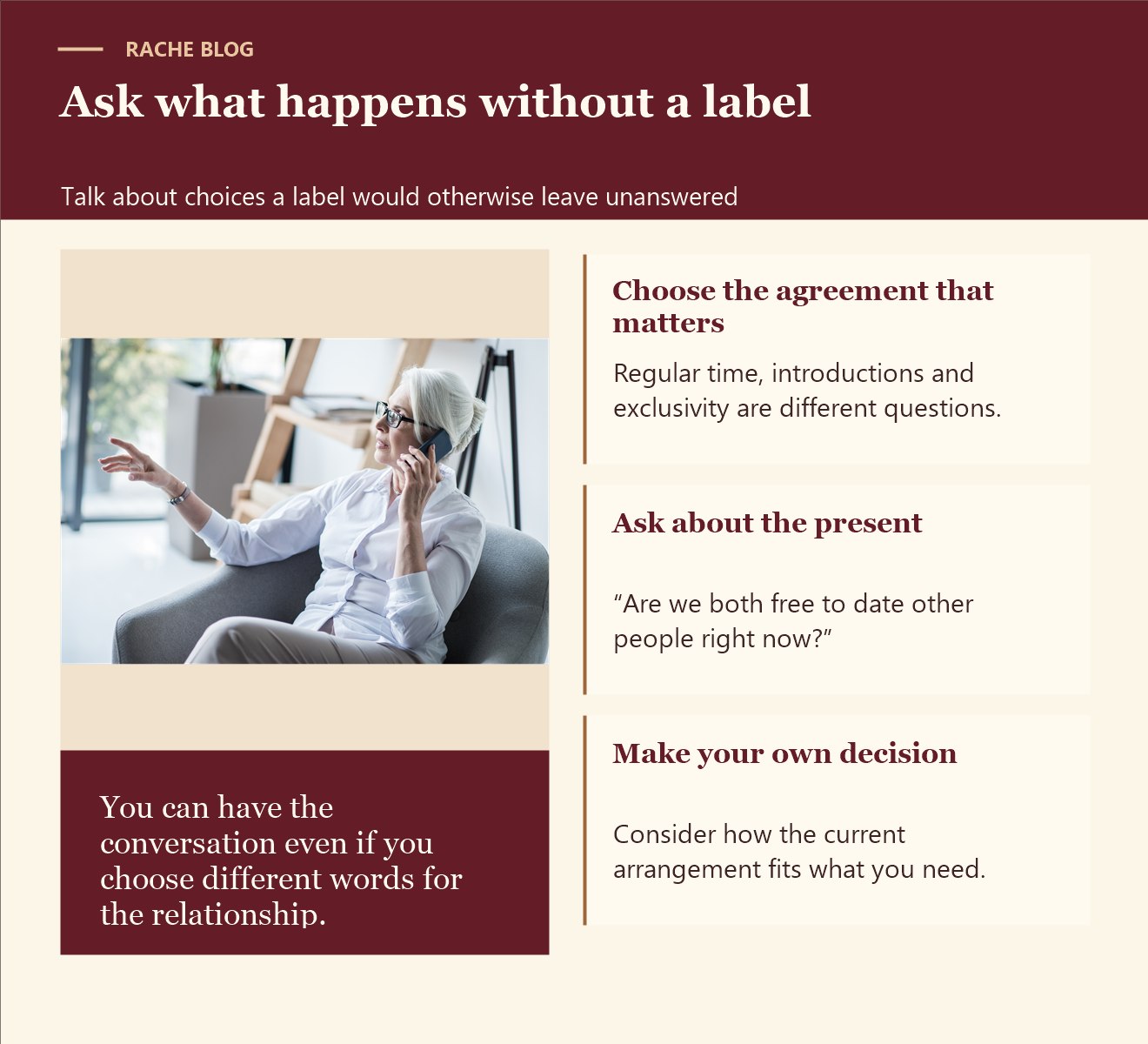
Ask what happens without a label
Talk about choices a label would otherwise leave unanswered
- Choose the agreement that matters Regular time, introductions and exclusivity are different questions.
- Ask about the present “Are we both free to date other people right now?”
- Make your own decision Consider how the current arrangement fits what you need.
You can have the conversation even if you choose different words for the relationship.