

You may have romantic feelings for more than one person and feel unsure what to do with them. Those feelings do not, by themselves, determine the relationship arrangement you want or the choices other people will make.
You do not need a quiz to prove that a feeling is real. Start by separating what you notice inside yourself from what you have promised, what you are doing and what you want to discuss.
On this page
Describe the feelings without forcing a verdict
Attraction, affection, curiosity, familiarity and a wish for a shared future can overlap. Try naming what draws you to each person without insisting that every feeling must mean the same thing.
You might enjoy one person’s company, imagine a different life with another, or feel close to both. A daydream or uncertainty about commitment cannot prove that you are in love with several people. It gives you something to reflect on, not a diagnosis.
Ask what you actually know about each connection and what you are imagining. Leave room for the other person’s understanding of the relationship, which may differ from yours.

Separate feelings from the actions you choose
Having a feeling does not require you to pursue it. You can choose to remain in a monogamous relationship, consider a different arrangement, end a relationship or spend time single while you think.
Consider the next concrete choice rather than trying to settle your entire future. Are you arranging a date, exchanging messages you have agreed not to exchange, or avoiding a conversation about commitment? What would a respectful response look like in that situation?
You do not have to shame yourself for an attraction to take responsibility for your actions. Likewise, describing a feeling as powerful does not remove another person’s right to decline.
Consider the agreements already in place
If you have agreed to exclusivity, take that agreement seriously. New feelings do not automatically change it. If you want something different, that needs discussion before treating a different arrangement as accepted.
People in consensually nonexclusive relationships also need clarity. The love is respect dating guide discusses shared definitions, respect and boundaries across different kinds of relationships.
A person may freely want monogamy and decline an open relationship. Someone else may want nonexclusivity and decline monogamy. You may discover a difference that cannot be resolved by choosing better words or waiting for someone to give in.
Choose an honest conversation without pressure
Not every passing thought needs to become a detailed disclosure. Consider whether your feelings are affecting an agreement, your behaviour or the future you are asking someone else to choose.
If you need to discuss a change, speak about your own wishes: “I have been questioning whether I want an exclusive relationship, and I want to talk before making decisions that affect us.” Avoid presenting another person as a rival or demanding an immediate answer.
Respect privacy and give the other person time. If you have already broken an agreement, acknowledge that separately rather than using the conversation to seek permission after the fact. If you fear retaliation, consider private support before deciding how to speak.
Think about capacity as well as attraction
Consider the time, attention and commitments you can realistically offer. Caring about someone does not guarantee that your schedules, preferences or hopes for the future will fit.
Ask yourself whether you can follow through on what you are proposing. Are you promising more availability than you have? Are you treating someone as a backup while hoping for another connection? Would you accept a clear no without continuing to persuade them?
You do not need to rank people as winners and losers. Focus on the relationship choices that are actually available and freely wanted by everyone involved.
Choose one next step you can stand behind
You might pause a developing connection, clarify an agreement, ask for time to reflect or end a relationship you no longer want. You can also seek a qualified counsellor’s help with sorting through your own preferences, without expecting them to select a partner for you.
Try completing two sentences: “What I can honestly offer now is…” and “What I need to discuss before going further is…” Keep the answers specific enough to guide your next action.
You cannot guarantee that nobody will feel disappointed. You can aim to avoid deception, respect an answer you did not hope for and make choices that do not require someone else to surrender their own.
Decide what needs a conversation before you change the arrangement
You may feel drawn to a second person while you’ve agreed to date exclusively. Take time to decide what you want before acting. If you want a different agreement, discuss that with the person affected before making promises to either person.
Share what they need to make their own decision while protecting other people’s privacy. Give both people room to decline and take their own time.
Read the infographic in text
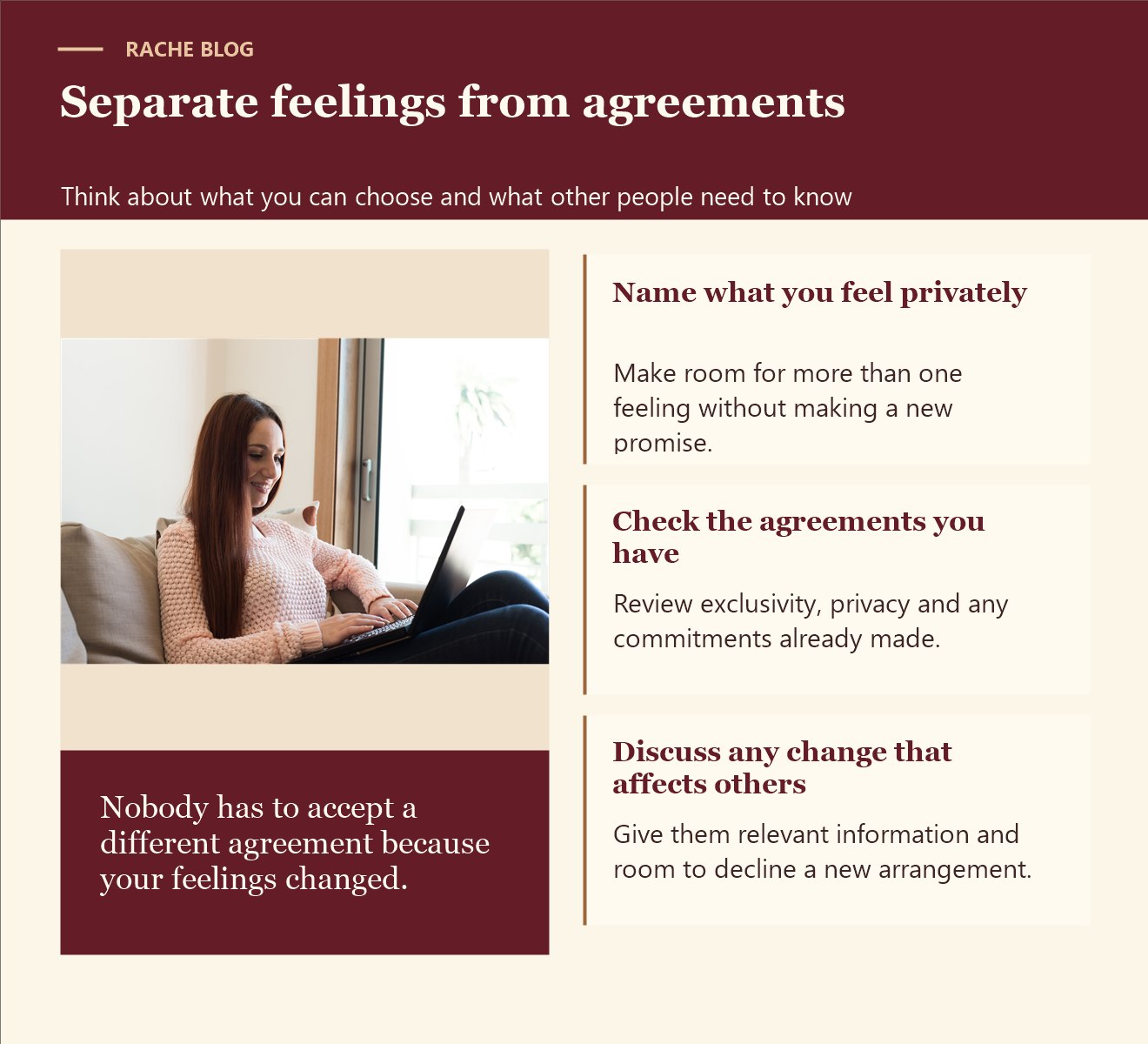
Separate feelings from agreements
Think about what you can choose and what other people need to know
- Name what you feel privately Make room for more than one feeling without making a new promise.
- Check the agreements you have Review exclusivity, privacy and any commitments already made.
- Discuss any change that affects others Give them relevant information and room to decline a new arrangement.
Nobody has to accept a different agreement because your feelings changed.