

A difficult family history may matter to the person you are dating, but it cannot tell you in advance how they love, communicate or handle commitment. Begin with the person and what they choose to share.
You can offer care without taking over their story. Listening, respecting privacy and making clear agreements give both of you something practical to work with.
On this page
Ask rather than assume
A divorce, a time in foster care, estrangement, bereavement or a parent’s harmful behaviour are different experiences. Family structure alone does not tell you whether someone felt loved, safe or supported. People can describe similar circumstances in very different ways.
Avoid calling a person or their family “broken,” especially if that is not language they use. They may feel close to some relatives, have chosen family, want limited contact or prefer not to discuss their childhood. None of those choices establishes their ability to be a good partner.
Try an invitation such as, “Is there anything about family that you’d like me to understand?” Accept a brief answer. You are getting to know them, not collecting an explanation for every feeling or disagreement.

Listen and protect their privacy
If they share something painful, give them time to speak without turning it into a comparison with your own upbringing. You might say, “Thank you for telling me. Would you like me to listen, help think about something practical or leave it there for now?”
You do not need every detail to take their preferences seriously. Ask before returning to the subject later, and let them change their mind about discussing it. Disclosure is not a test they must pass before you can trust them.
Ask what, if anything, can be shared with friends or relatives. For example: “My family may ask about yours. What would you like me to say?” You can seek support for your own feelings while limiting identifying details and avoiding gossip about their experiences.
Make ordinary agreements reliable
Rather than promising that you will never disappoint them, make commitments you can reasonably keep. Confirm plans, say when you are unavailable and tell them when circumstances change. Ask what kind of check-in would suit you both.
If you miss an agreement, acknowledge the particular thing you did: “I said I’d call and didn’t let you know I was delayed. I’m sorry. Next time I’ll send a message before the agreed time.” An explanation is useful when it leads to a realistic change.
A partner may appreciate reassurance or prefer more space; ask instead of guessing. You are also allowed to need reliability, consideration and an answer to a reasonable question. Care should include both people.
Plan family contact together
Before an introduction, holiday or family celebration, talk about the actual event. Who will be there? How long would you like to stay? What questions might come up? Would separate transport or a shorter visit make the plan easier?
Here are examples you can adapt:
- “Would you prefer a short coffee with my sister before a larger gathering?”
- “If someone asks about your parents, would you like to answer yourself or have me change the subject?”
- “What would you like us to do if a conversation becomes uncomfortable?”
Respect a decision not to attend or not to contact a relative. Do not arrange a surprise reunion, offer relatives private information or make reconciliation a condition of being accepted by your family. You can discuss how separate plans affect you without deciding the other person’s family relationships for them.
Keep care and boundaries mutual
A painful history can be relevant to a conversation, but you do not have to accept insults, pressure, threats or control. Name the present behaviour and what you need: “I want to hear your concern. I need us to speak without name-calling.”
The NHS guide to healthy relationships recommends listening, open communication and limits around the support you can offer. It also makes room for your own wellbeing and time outside the relationship.
If a disagreement is safe to pause, agree when to return to it rather than disappearing indefinitely. If you fear retaliation or feel unsafe, consider private support through a safe route before confronting the person. Their past does not make you responsible for preventing their harmful choices.
Discuss support and your shared future
If your partner wants support beyond the relationship, ask what would be helpful. That could mean time with a trusted friend, practical help with a task or assistance finding a qualified professional. Let them choose whether to pursue that help; a romantic partner cannot promise to repair someone’s past.
Talk directly about marriage, children, money and family contact as those questions become relevant. Do not assume that a difficult childhood makes someone afraid of marriage, eager to become a parent or certain to remain in a relationship.
Notice the relationship you are building now: Can both of you say no, raise a concern, enjoy time together and change an agreement through discussion? Our guide to a strong connection explores why mutual interest and everyday behaviour deserve attention alongside the stories you share.
Read the infographic in text
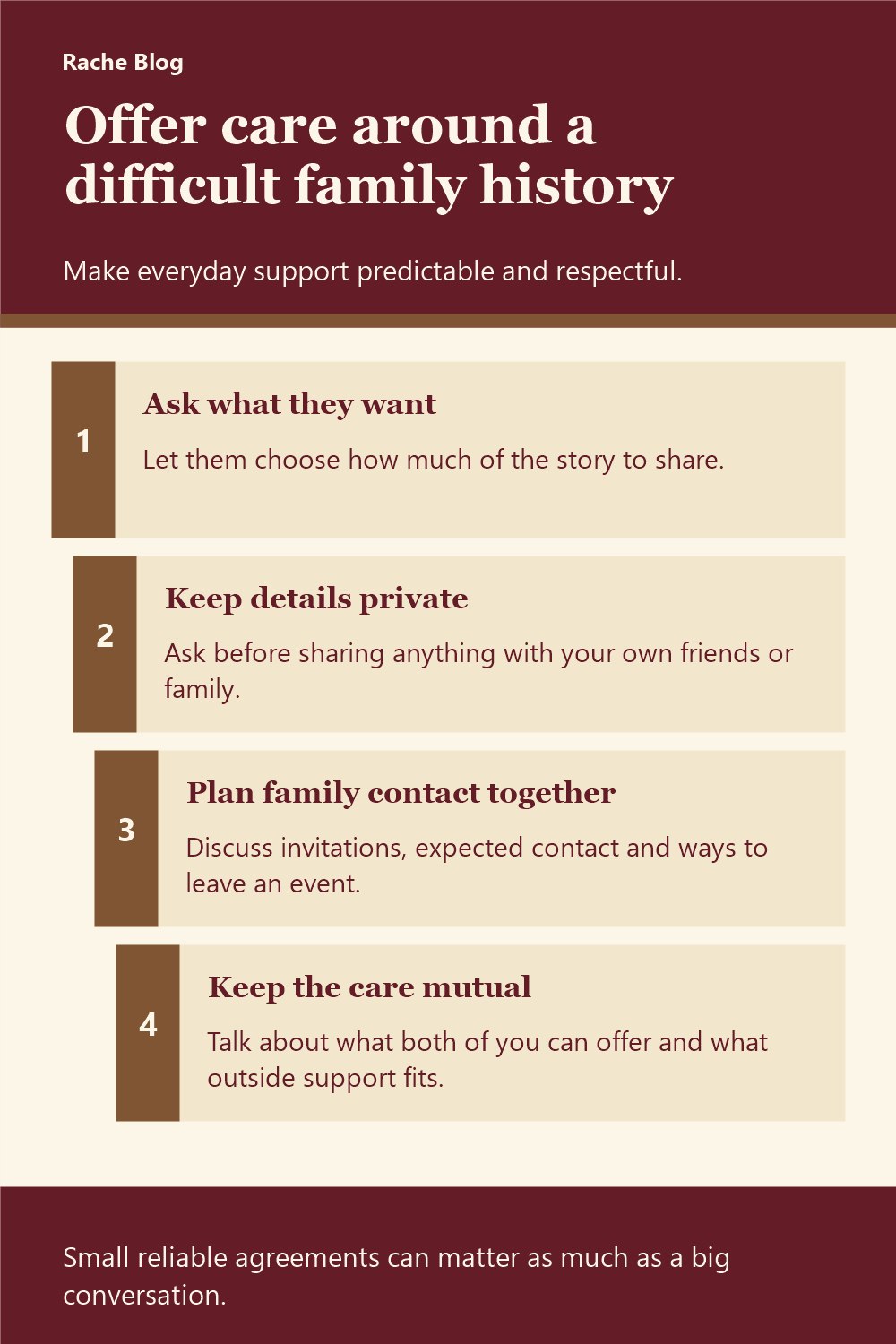
Offer care around a difficult family history Make everyday support predictable and respectful.
- Ask what they want Let them choose how much of the story to share.
- Keep details private Ask before sharing anything with your own friends or family.
- Plan family contact together Discuss invitations, expected contact and ways to leave an event.
- Keep the care mutual Talk about what both of you can offer and what outside support fits.
Small reliable agreements can matter as much as a big conversation.