

Love without labels can mean enjoying a connection without calling each other partners, boyfriend or girlfriend. It does not tell you whether the relationship is exclusive, sexual, casual or intended to last.
People of different ages may want different arrangements. What matters is whether the people involved can understand the situation, choose it freely and discuss what they need.
On this page

Discuss what you are agreeing to
Begin with the practical questions that a label might otherwise leave you guessing about. Are you seeing other people? Are you hoping for an ongoing partnership? How much contact or time together feels realistic?
You might say, “I enjoy seeing you, and I am not assuming that we are exclusive. How do you understand what we are doing?” Give the other person room to answer honestly, including an answer that differs from yours.
Do not assume that avoiding a title creates an open relationship, or that affection creates exclusivity. The love is respect guide to dating definitions encourages people to discuss their understanding and boundaries, whatever words they use.
Agree on relevant information and privacy
Talk about what you need to know to make your own choices. That could include whether an exclusivity agreement has changed, plans that affect shared time, or information relevant to decisions about sexual contact.
You do not need a detailed account of every thought, conversation or encounter. Another person’s private information also deserves consideration. Agree on what needs to be shared and when, rather than demanding a constant report of each other’s activities.
If you have crossed an agreement, describe what happened accurately and take responsibility for your choices. Avoid making the other person responsible for reassuring you or agreeing to a different arrangement immediately.
Make consent and sexual-health choices explicit
A casual arrangement still leaves each person free to accept or decline affection and sex. Agreeing to date, having sex previously or knowing that someone has other partners does not settle what anyone wants today.
If sexual contact is part of the relationship, discuss boundaries and prevention before relying on assumptions. The NHS condom guide explains how condoms help prevent pregnancy and lower the risk of sexually transmitted infections. A qualified sexual-health service can advise on testing and prevention for your circumstances.
You can ask for time, change your mind or decide that a particular arrangement does not work for you. No relationship description makes pressure acceptable.
Set digital boundaries you both understand
Consider what you want to share online: photos together, relationship status, tags or details about dates. Ask before posting information that identifies or describes someone else.
Feeling curious or unsettled does not create permission to enter an account, track a location or repeatedly monitor someone. If seeing their posts is difficult, you can mute or unfollow them and think about what the feeling is telling you about your needs.
A direct question about an agreement will usually give you more useful information than interpreting a photograph. Our guide to phones, photos and privacy offers examples you can adapt.
Choose how to describe the connection publicly
You may want to introduce someone to friends without selecting a permanent title. Discuss the words you are comfortable using before an event: “We are seeing each other,” for example, may be enough.
Neither person owes friends or relatives every private detail. You can also want acknowledgement and decide that being kept secret does not suit you. Talk about that difference without treating public disclosure as something you can impose on another person.
Supportive people can help you reflect, but their approval cannot decide the arrangement for you. You are allowed to consider your own comfort as well as someone else’s preferences.
Return to the conversation when needs change
A useful agreement can be revisited. Choose a time to check in, or agree to raise a change before acting on it. Ask, “Does this still suit you?” and “Is there anything we have been avoiding saying?”
You may decide to continue, choose a label, change an agreement or stop seeing each other. Wanting commitment is a valid preference, and wanting something less defined does not create an obligation for the other person to accept it.
If you fear threats, pressure or retaliation, seek confidential support through a safe route before planning a joint conversation. Clearer words are useful when you have room to make a choice.
Read the infographic in text
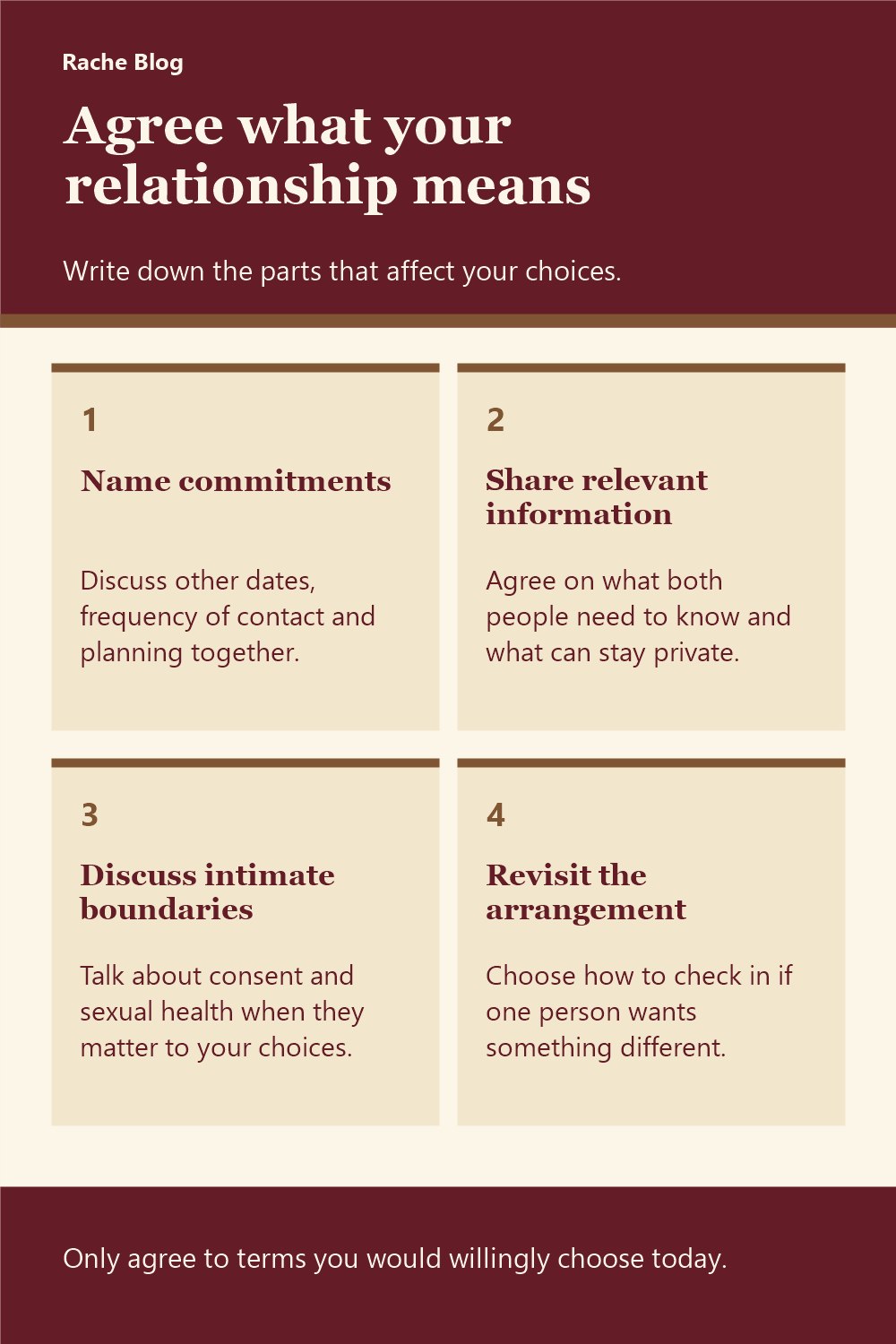
Agree what your relationship means Write down the parts that affect your choices.
- Name commitments Discuss other dates, frequency of contact and planning together.
- Share relevant information Agree on what both people need to know and what can stay private.
- Discuss intimate boundaries Talk about consent and sexual health when they matter to your choices.
- Revisit the arrangement Choose how to check in if one person wants something different.
Only agree to terms you would willingly choose today.