

A wedding can mark a commitment, but it does not give two people identical preferences, unlimited time or the ability to read each other’s minds. Intimacy is easier to discuss when you replace assumptions with specific questions about what you both want.
These eight topics offer a starting point. You can discuss affection, sex, privacy and time together without treating a particular frequency or style of relationship as a requirement for every marriage.
On this page
- Decide whether planning time helps
- Let the wedding night fit how you both feel
- Talk about changes in attraction without blame
- Ask about preferences instead of assuming
- Make time within your actual responsibilities
- Let novelty remain optional
- Discuss privacy without assuming motives
- Revisit agreements when circumstances change

1. Decide whether planning time helps
Scheduling can be useful when work, care responsibilities or different routines make time together difficult. It can also feel too rigid for some couples. Ask whether a planned evening would help you make room for each other, and what you would enjoy doing.
An agreed time is an opportunity to connect, not an obligation to have sex. Leave room to change the plan, rest or choose another kind of closeness. A quiet meal or a walk can still be time together if that is what you both want.
2. Let the wedding night fit how you both feel
A celebration can leave people excited, tired, distracted or ready for sleep. You do not need to turn the wedding night into a performance or use it as a test of attraction. Talk beforehand about practical plans, including travel, food and rest.
Neither a ceremony nor an earlier promise removes a person’s choice about physical intimacy. You can celebrate being married in a way that feels comfortable to both of you, including choosing an ordinary evening and an early night.
3. Talk about changes in attraction without blame
Marriage does not guarantee unchanging desire, and a change in attraction does not provide a complete explanation of the relationship. Try describing what you have noticed rather than blaming someone’s body or assuming that you know what they feel.
For example, you might ask whether the amount or kind of affection you share still feels comfortable. Listen without demanding reassurance or an immediate solution. If you want help with a persistent concern, choose support appropriate to the question rather than relying on a prediction about what all married couples experience.
4. Ask about preferences instead of assuming
Familiarity is not mind reading. A partner may not know that something you once enjoyed now feels uncomfortable, or that you would prefer a different kind of affection. Use clear language and make room for an answer you did not expect.
RAINN’s consent guide explains that agreement must be voluntary and ongoing. A previous yes, flirting or being in a relationship does not establish consent now. Ask, listen and stop when someone declines, withdraws or seems unsure.
5. Make time within your actual responsibilities
A busy schedule does not reveal everything about how much someone cares. Work hours, children, disability, care duties and travel can affect what is possible. Make the practical question visible: what time do you each have, and how would you like to use some of it together?
Discuss responsibilities as well as dates. If one person regularly carries the planning and household work, another romantic evening may not address the main difficulty. Choose a small agreement you can review, such as who arranges the next outing or when you will talk without interruptions.
6. Let novelty remain optional
New experiences are optional. Familiar affection can be enjoyable, and neither person has to agree to an activity to prove that the marriage is exciting. Ask what each of you actually wants rather than using a list of supposed milestones.
You might prefer more relaxed conversation, affectionate touch, privacy or a slower pace. If your preferences differ, discuss the difference without ridicule or repeated persuasion. An activity that one person freely declines can remain off the list.
7. Discuss privacy without assuming motives
Masturbation does not by itself establish that someone is dissatisfied with their spouse, and marriage does not mean that each person stops having private preferences. Avoid using one behaviour as proof of a hidden motive.
If a concern affects your shared life, name the specific issue: privacy, interrupted time together, an agreement you understood differently or something else. Discuss what you each want to share and keep private, without assuming an entitlement to every personal detail.
8. Revisit agreements when circumstances change
Preferences and circumstances can change. Return to an agreement when it no longer fits, and explain what you would like to reconsider. You can take a concern seriously without promising a particular outcome or treating every difference as a crisis.
A useful opening is, “I’d like us to talk about how we make time for affection. What feels good about our routine, and what would you change?” If you fear pressure or retaliation for saying no, prioritise support and safety rather than trying to find more persuasive words.
Read the infographic in text
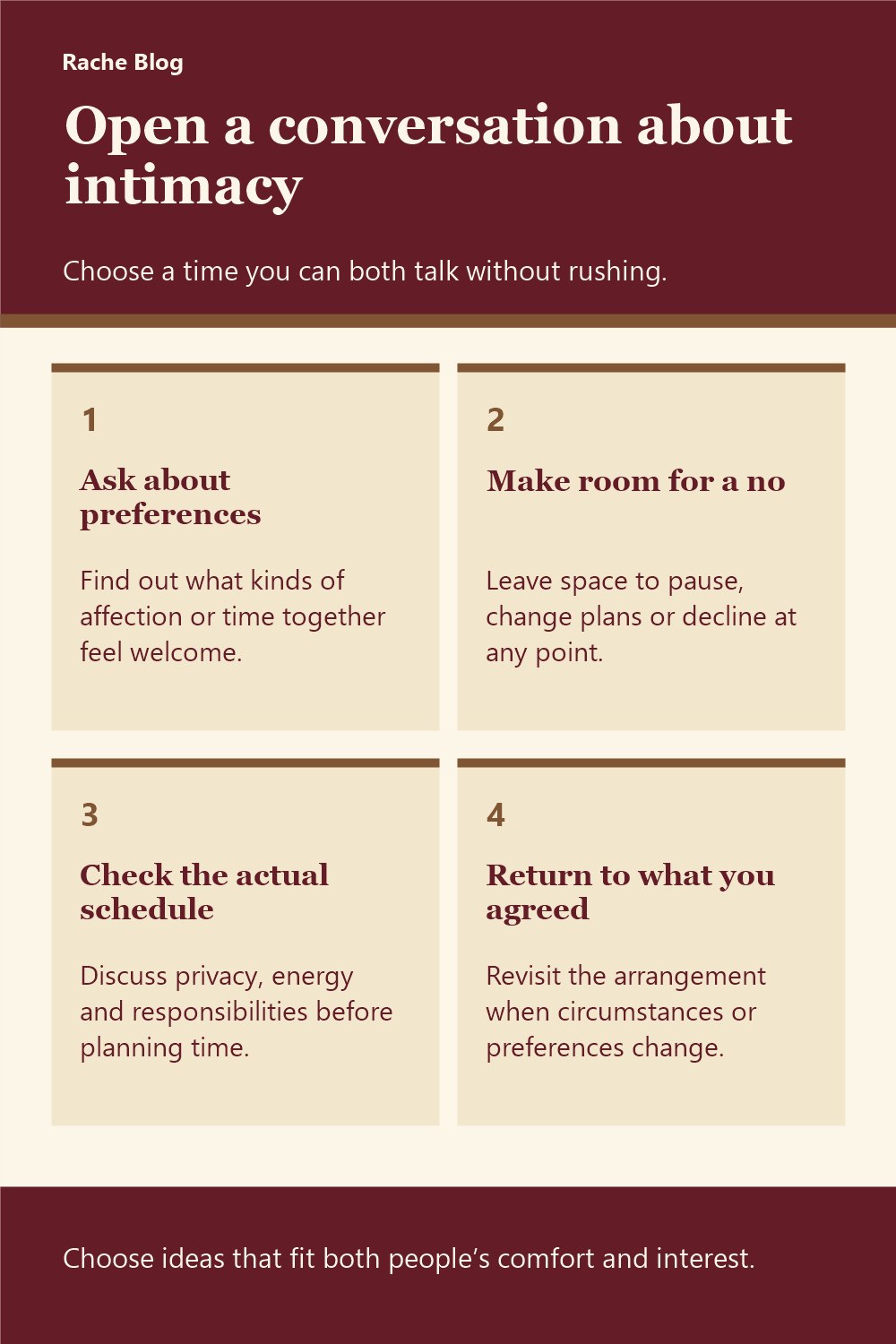
Open a conversation about intimacy Choose a time you can both talk without rushing.
- Ask about preferences Find out what kinds of affection or time together feel welcome.
- Make room for a no Leave space to pause, change plans or decline at any point.
- Check the actual schedule Discuss privacy, energy and responsibilities before planning time.
- Return to what you agreed Revisit the arrangement when circumstances or preferences change.
Choose ideas that fit both people’s comfort and interest.