

“Pair-and-a-spare” is a dating phrase for seeing several people while deciding whom to pursue. The phrase can make people sound like ranked options or backups, and some versions insist that three is the ideal number.
There is no number that everyone must date. You may prefer one person at a time, nonexclusive dating or a break from dating. What matters is that the arrangement is honest, voluntary and compatible with the agreements and capacity of the people involved.
On this page
1. Choose a pace you can actually manage
Consider your available time, energy and interest before adding dates to your week. Can you make and keep plans, respond in a way you are comfortable with and still have time for friends, rest and other responsibilities?
Do not arrange extra dates to meet a quota or keep a reserve person available. Dating one person at a time is a valid preference. So is deciding that you do not currently have room to date.
If several conversations begin to feel like administration rather than something you want, slow down. Having more options is not an obligation to pursue them.

2. Explain nonexclusivity before assumptions build
Different people attach different expectations to a first date, regular contact or having sex. Instead of assuming your expectations are shared, explain the arrangement you are offering early enough for the other person to make an informed choice.
You could say, “I am getting to know more than one person and have not agreed to be exclusive. How do you feel about that?” Do not imply exclusivity to keep someone interested, and answer reasonable questions honestly.
The other person may want something different. Respect that answer rather than persuading them to accept an arrangement they do not want.
3. Honour the agreements you already have
If you have agreed to an exclusive relationship, dating someone else conflicts with that agreement unless you both freely agree to change it. A new label does not erase an existing commitment.
Discuss changes before acting on them. An agreement reached through pressure, threats or fear is not a useful basis for consensual nonmonogamy. People can ask for a different arrangement, decline one or decide that their preferences no longer fit.
When something is unclear, ask about the practical question: dating others, sexual contact, emotional commitments or what you will share when circumstances change.
4. Protect privacy without using secrecy to mislead
Being honest about nonexclusivity does not mean sharing another person’s name, messages, photographs or intimate details. You can discuss your own arrangements while respecting other people’s privacy.
Avoid ranking dates aloud, making comparisons designed to create jealousy or treating someone as a replacement you will keep until a preferred person agrees. Each person can choose whether the actual connection is worthwhile.
If someone asks a question you do not want to answer, state that boundary clearly. Do not use privacy as an excuse to give a false answer about an agreement or a relevant change.
5. Discuss boundaries and sexual health when relevant
Before sexual contact, talk about what each person wants and does not want, relevant testing, barriers and contraception where applicable. Having a date or an existing relationship is not consent to a particular activity.
Condoms can reduce the risk of sexually transmitted infections and help prevent pregnancy; they do not eliminate every risk. The NHS condom guide explains correct use. A sexual-health clinician can help with questions specific to your situation.
Agree on how you will discuss changes that affect those choices. Respect a pause or refusal without punishment, and do not assume that nonexclusive dating means everyone has accepted the same risks.
6. Review the arrangement and end connections clearly
You may eventually want exclusivity, a different agreement or an end to a particular connection. Bring that up directly: “I would like to date exclusively. Is that something you want?” A shared choice needs an actual conversation, not a deadline imposed by a dating formula.
If you do not want to continue, a brief kind message can be enough where it is safe: “Thank you for meeting me. I do not want to keep dating, and I wish you well.”
You do not need to wait until someone else is available before ending a connection that no longer fits. The love is respect boundary guide offers further help with expressing and respecting limits.
Make a weekly plan you can honestly keep
Imagine you can realistically make one date next week, but two people are asking about the same night. Offer each a plan you can keep, or tell them you’ll know your schedule later. If someone believes you’ve agreed to exclusivity, address that before making another plan.
You can say you’re still dating without sharing other people’s names or private details. Discuss the information that matters for sexual health and any agreement you’ve already made.
Read the infographic in text
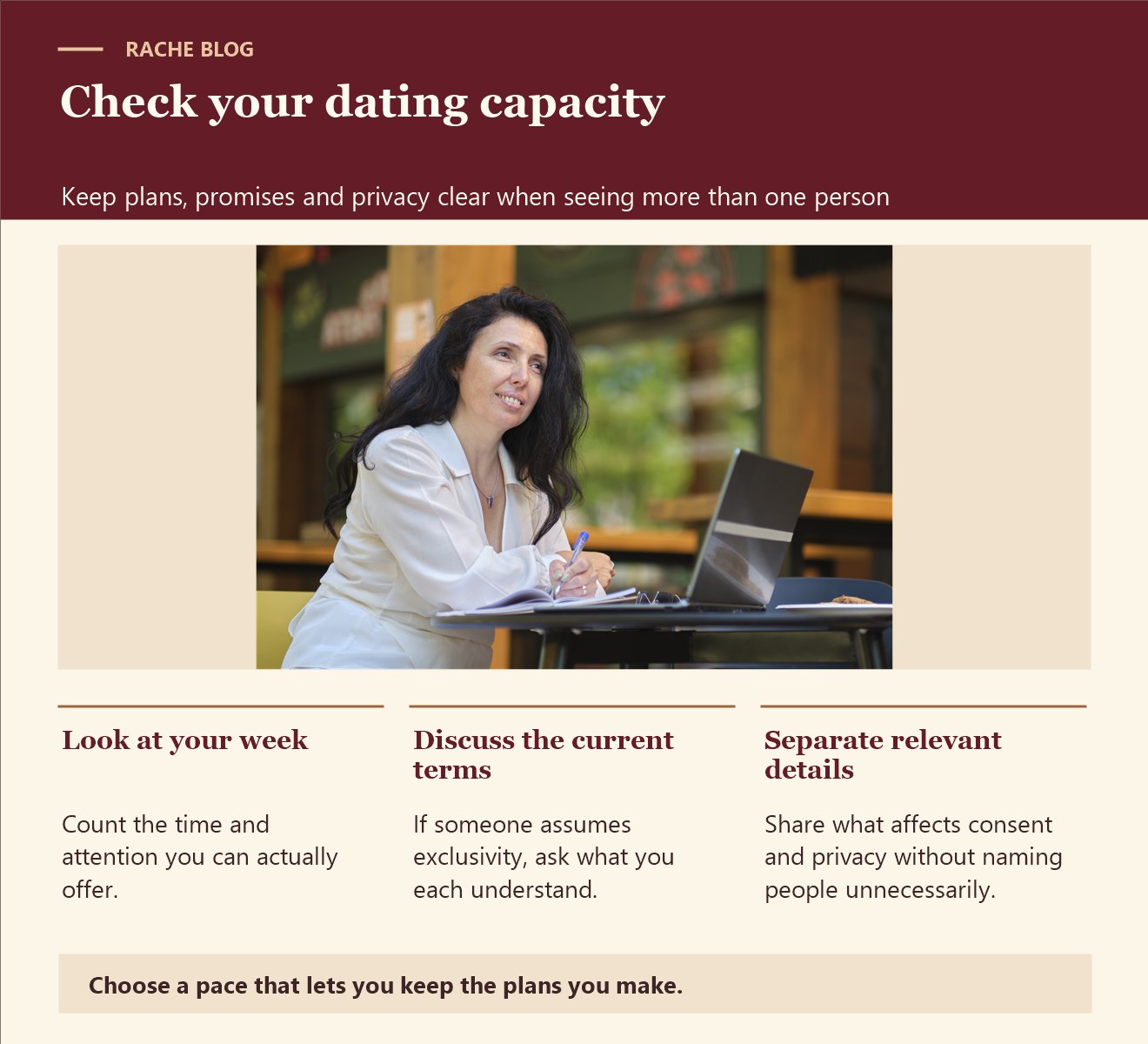
Check your dating capacity
Keep plans, promises and privacy clear when seeing more than one person
- Look at your week Count the time and attention you can actually offer.
- Discuss the current terms If someone assumes exclusivity, ask what you each understand.
- Separate relevant details Share what affects consent and privacy without naming people unnecessarily.
Choose a pace that lets you keep the plans you make.