

Making the first move can be as simple as asking someone whether they would like to go on a date. You do not need a rule about which gender should initiate, and no approach can guarantee a particular answer.
Aim for clarity and enough room for the other person to choose. A direct invitation is usually more useful than trying to decode every compliment or perform a version of confidence that does not feel like you.
On this page
1. Choose a moment when they can respond freely
Look for an ordinary opportunity to talk without cornering someone or interrupting something important. If they are working, rushing, wearing headphones or trying to leave, another moment may be more considerate. Attention and politeness alone do not establish romantic interest.
Think about the setting as well as your words. A customer, employee or person who depends on you may not feel equally free to decline. Where work rules or a power difference complicate the situation, keep the interaction professional rather than trying to make the invitation more persuasive.

2. Make the invitation clear and manageable
You could say, “I’ve enjoyed talking with you. Would you like to get coffee with me as a date this weekend?” This is example wording to adapt. Naming a date can prevent the confusion that comes from calling a romantic invitation an ordinary friendly meeting.
Suggest something simple and give them a way to decline. You do not need an elaborate gift, a surprise booking or an audience. Save detailed arrangements for after you know that the other person wants to go.
3. Treat the answer as information
A yes means you can discuss a plan. A no means you should stop pursuing that invitation. You do not need to ask for a reason, argue that you would be good together or request a trial date to change their mind.
An unclear answer may feel frustrating, but it does not require you to keep chasing. You might say, “No problem; let me know if you’d like to arrange something.” Then leave the next step with them and continue your own plans rather than repeatedly checking for an answer.
4. Keep online invitations specific and proportionate
On a dating app, begin with the conversation you are actually having rather than sending an intense declaration to a stranger. If you would like to meet, suggest a public place and ask what would feel comfortable. Keep private information out of a first invitation.
If you do not receive a reply, avoid sending a string of messages or seeking the person on other accounts. Silence is not an invitation to find a more effective channel. You can feel disappointed and still respect the limit of the contact available.
5. Ask separately about physical closeness
Accepting a date does not establish agreement to kissing, touching or sex. Ask about the next step instead of treating the invitation as permission for everything that might follow. For example, “Would you like me to kiss you?” leaves room for a clear answer.
RAINN’s explanation of consent stresses ongoing, voluntary agreement. Stop if someone declines, withdraws or appears unsure. You do not need to keep an intimate moment going to protect yourself from embarrassment.
6. Let the outcome fit the connection you actually have
If interest is mutual, agree on a place, time and a way to confirm the plan. You can keep getting to know each other without treating one date as a commitment to a relationship. Notice whether you both participate in making arrangements.
If they decline, you can say, “Thanks for being clear,” and step back. When the person is a friend, consider whether ordinary friendship still feels manageable for you. A respectful invitation can end with either answer; your next choice is how to care for yourself while respecting theirs.
Ask without making it an announcement
If someone mentioned a bakery you also wanted to visit, you could say, “I’m planning to go Saturday. Would you like to join me for coffee as a date?” Ask when they can reply without feeling watched.
If they say no, you can thank them for being honest and make your own plan. If you share a workplace or another setting where they may feel pressure, choose whether it would be kinder to leave the invitation unspoken.
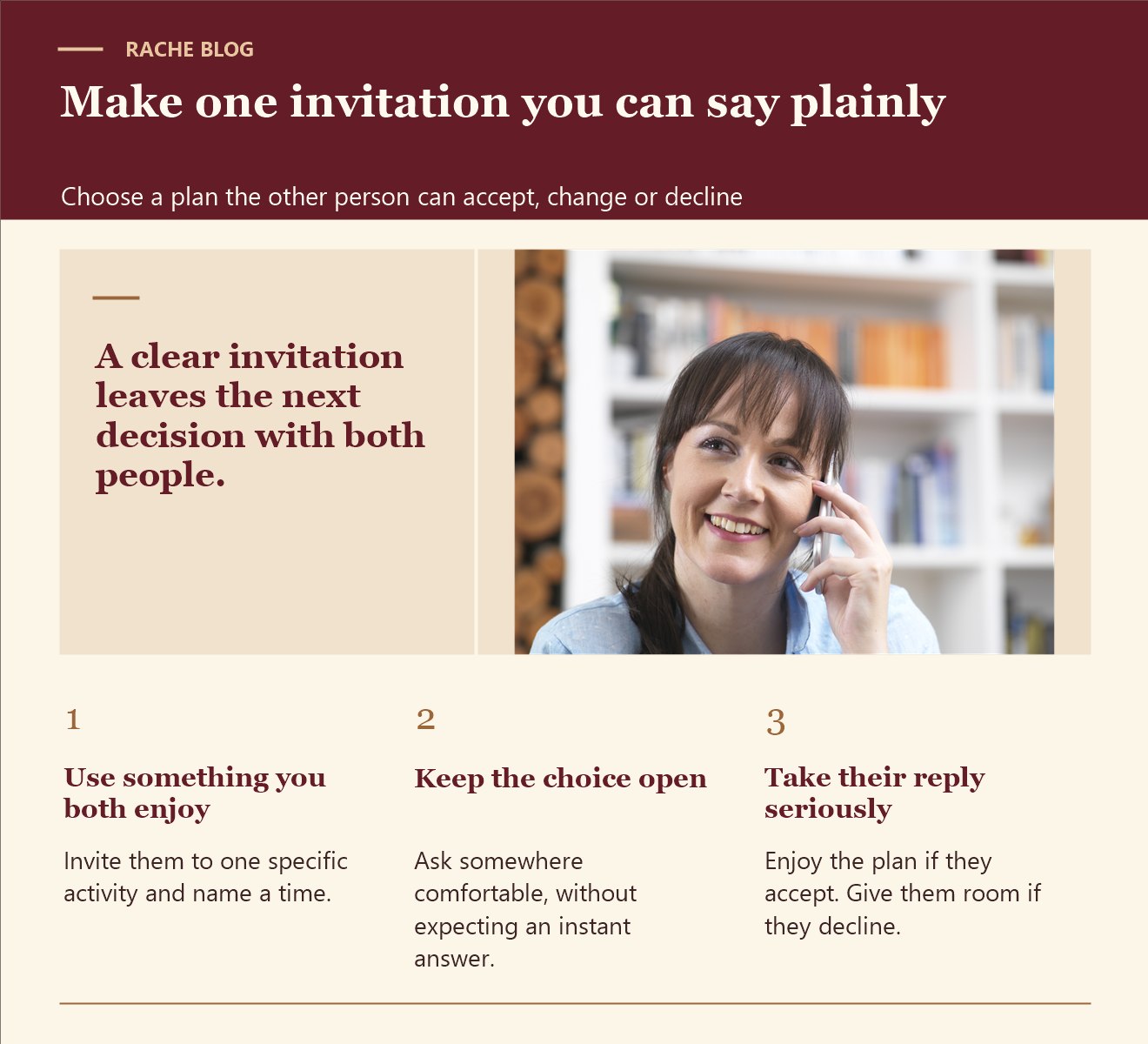
Read the infographic in text
Make one invitation you can say plainly
Choose a plan the other person can accept, change or decline
- Use something you both enjoy Invite them to one specific activity and name a time.
- Keep the choice open Ask somewhere comfortable, without expecting an instant answer.
- Take their reply seriously Enjoy the plan if they accept. Give them room if they decline.
A clear invitation leaves the next decision with both people.